
Fresh Food in Winter: How to Feed Rabbits and Guinea Pigs When It’s Cold
Translated from our German original. Any rules and regulations mentioned refer to Germany and may differ where you live.
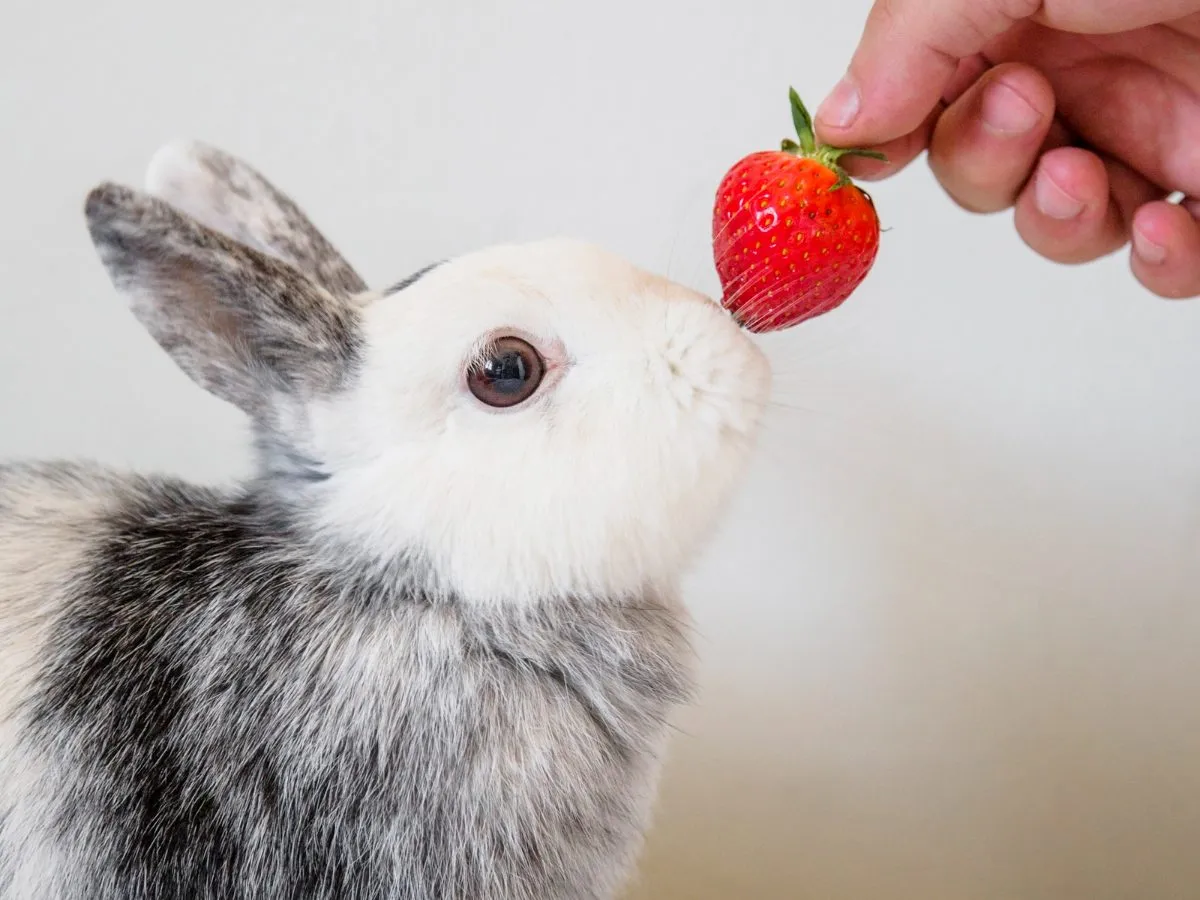
Rabbits and guinea pigs need fresh food in winter just as much as in summer, even when the lawn outside has turned brown, frozen solid or vanished under snow. Meanwhile, a pair of long-eared residents or a gang of guinea pigs is sitting in the enclosure, looking at you expectantly. The good news: the menu stays basically the same. Hay is the foundation; the greens now just come from the vegetable aisle rather than the meadow. Here you’ll find out what can go in the bowl in winter, why guinea pigs need extra attention when it comes to vitamin C, and what you can do about frozen food. To learn how to winterproof the shelter, enclosure and water, read our guide to keeping rabbits and guinea pigs outside in winter. If it’s already freezing where you are, jump straight to fresh food in frosty weather.
Why fresh food still matters in winter
Rabbits and guinea pigs are strict herbivores that eat little and often, almost around the clock. According to the rabbit fact sheet from the Veterinary Association for Animal Welfare (Tierärztliche Vereinigung für Tierschutz, TVT) (PDF, in German), rabbits eat up to 80 small portions a day. Their gut is designed for a high-fibre diet, and the TVT warns that feeding mistakes can even be fatal. So there’s no winter break from greens.
For both species, the TVT recommends a balanced mix of fresh food every day alongside hay, roughly 200 grams per kilogram of body weight. About 70 percent of that should be green forage such as grasses, herbs and salad leaves, 20 percent vegetables and no more than 10 percent fruit. This split applies all year round. What changes in winter is mainly where the greens come from.
Fresh food also brings plenty of moisture with it. According to the TVT, a generous fluid intake through food helps prevent bladder sludge in rabbits. The Swiss Veterinary Association for Behavioural Medicine (STVV) (PDF, in German) also advises feeding greens regularly throughout the year if possible, so the gut flora stays used to them. Skip the greens all winter and then serve up a whole meadow in spring, and you’re asking for digestive trouble.
Hay is still the foundation
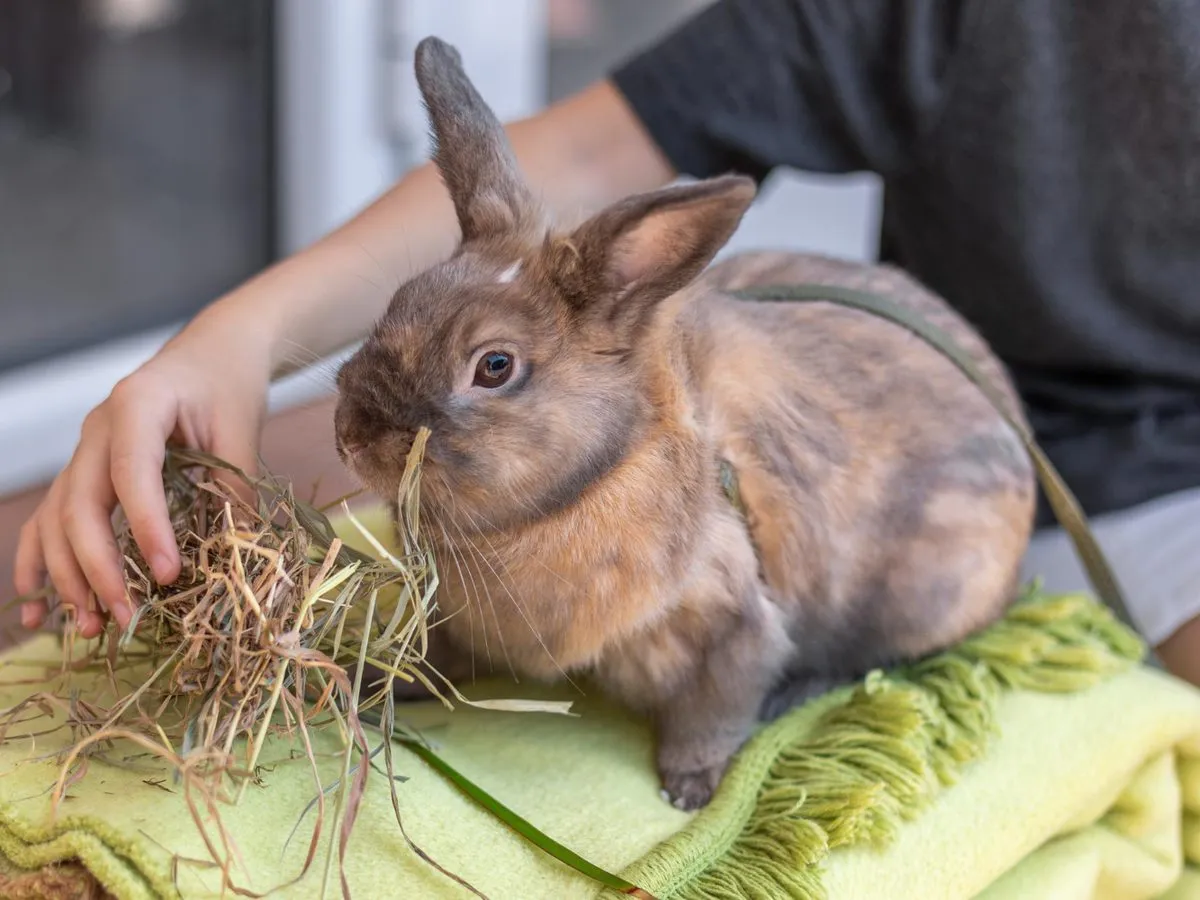
As important as fresh food is, hay plays the leading role. The German Animal Welfare Federation (Deutscher Tierschutzbund) (PDF, in German) calls good hay that is available at all times the basis of a healthy diet. It shouldn’t be over-mature or too woody. The Zurich Animal Hospital (Tierspital Zürich) (PDF, in German) also stresses that hay must be offered throughout the day because it wears down the teeth and keeps the gut moving. As a rough guide, the MSD Veterinary Manual says guinea pigs should eat about their own body size in hay each day.
Good hay smells pleasant, is dry and free of mould. According to the MSD Veterinary Manual, a hay rack keeps it clean and dry. The TVT says uneaten hay and fresh food should be replaced every day. And even though fresh food supplies moisture, the TVT is clear that water must always be available, ideally in a bowl.
What can go on the winter menu
When fresh grass stops growing in winter, a fact sheet from the Bey, Zinsen & Partner veterinary practice in Aachen (PDF, in German) suggests turning to shop-bought vegetables and herbs instead. The rule of thumb: for rabbits, the leafy tops are worth more than the root. Leafy beats crunchy. For the basics of rabbit feeding, take a look at our article on rabbit food.
Leafy greens, bitter salads and herbs
As winter vegetables, the Aachen practice lists kohlrabi leaves, fennel and carrot tops, lamb’s lettuce and chicory, plus herbs such as parsley and basil. Bitter salads such as endive, frisée and radicchio are on its list too. According to the rabbit welfare association Kaninchenhilfe Deutschland e. V. (in German), chicory can be part of a rabbit’s daily menu. The STVV, on the other hand, warns against greenhouse-grown butterhead lettuce because it can be high in nitrates, and in winter that’s exactly where butterhead lettuce often comes from. You’ll find more ideas for guinea pigs in our herbal ABC for guinea pigs.
Cabbage: handy, but introduce it slowly
Cabbage is easy to get hold of in winter, and the Aachen practice specifically names savoy and Chinese cabbage as winter vegetables. The Tierschutzbund writes that you can feed rabbits cabbage, too, as long as you get them used to it gradually. The TVT cites getting used to cabbage as an example of a dietary change that has to happen slowly so the gut flora can adapt. So cabbage isn’t a case for a whole head on day one, but for a single leaf and a close eye on how it goes.
Root vegetables and fruit only sparingly
Carrots, parsnips and celeriac are popular, but they contain a lot of carbohydrates. That’s why the Aachen practice recommends root vegetables only for animals with a healthy gut, and the STVV advises small amounts of carrots and apples, “a slice or a wedge at a time”. According to the TVT, fruit should stay at no more than 10 percent of the fresh food. Because of its sugar content, the Tierspital Zürich recommends fruit only very sparingly, if at all. According to the Aachen practice, you can offer healthy rabbits herbs you dried in summer, but because they contain less water, only in small amounts as a treat.
Twigs for gnawing
For gnawing and keeping busy, the TVT and the Tierspital Zürich recommend twigs, for example from unsprayed fruit trees, hazel or willow. Which plants are toxic and don’t belong in the bowl is covered in our guide to what rabbits shouldn’t eat. A feeding tree for rabbits and guinea pigs also brings some variety to grey winter days.
Vitamin C for guinea pigs
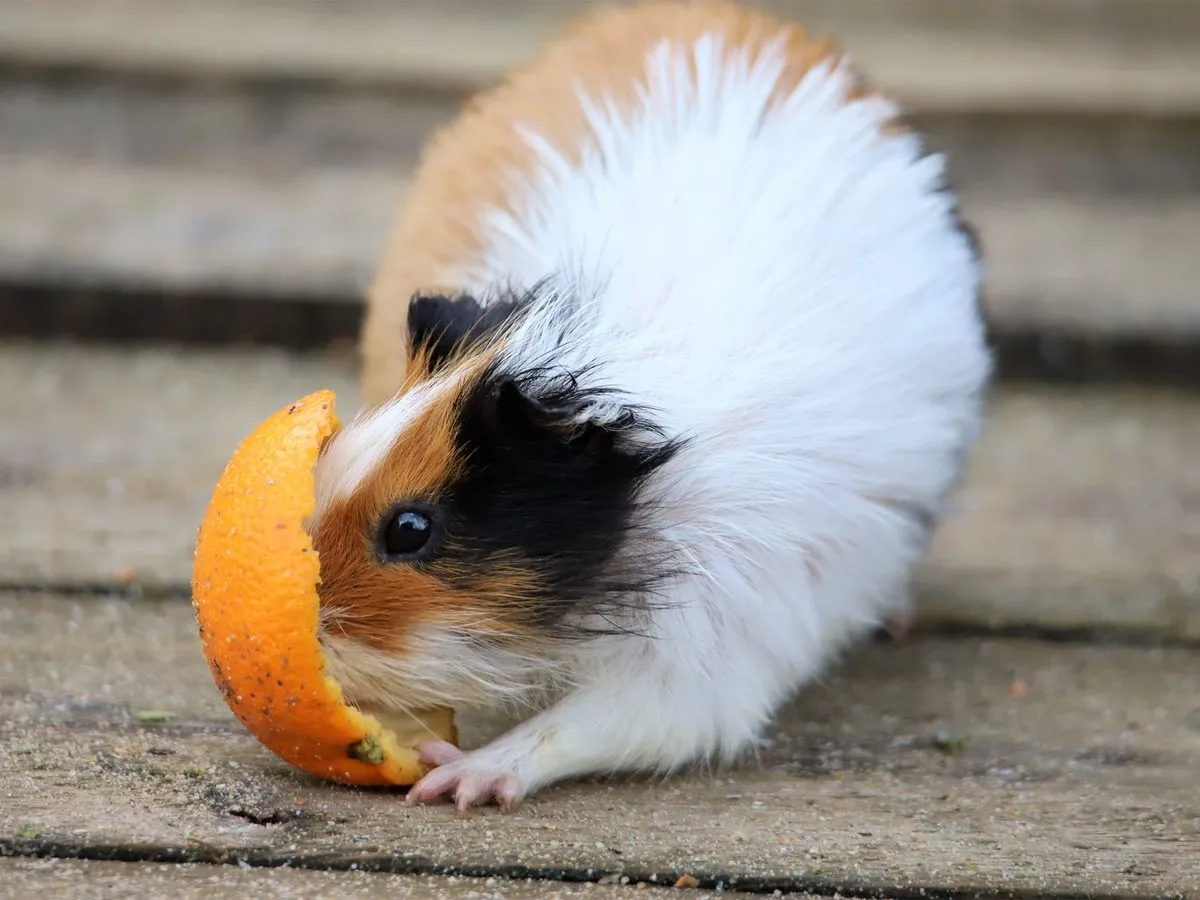
This is where the two housemates differ significantly. Guinea pigs, just like us humans, can’t make their own vitamin C. Rabbits can, as the Tierspital Zürich explains. According to the TVT fact sheet on guinea pigs (PDF, in German), guinea pigs therefore often suffer from scurvy, and their supply should preferably be ensured through fresh food. In winter, when there’s no meadow grass, it’s worth taking a close look at what’s in the bowl.
How much vitamin C do guinea pigs need?
The Tierspital Zürich gives around 15 milligrams of vitamin C per kilogram of body weight per day. The MSD Veterinary Manual states a typical range of 10 to 25 milligrams per kilogram for adults, and 30 milligrams or more for young, pregnant, nursing and sick guinea pigs. You don’t need to weigh the vegetables. If you feed a varied selection of vitamin C-rich greens every day, you’re on the right track.
Good sources of vitamin C in winter
According to the MSD Veterinary Manual and the veterinary practice of Prof. Uwe Gille in Halle (PDF, in German), foods high in vitamin C include bell peppers, parsley, broccoli, kale and dandelion. Prof. Gille particularly highlights yellow peppers. However, he notes that parsley is also high in oxalic acid and is therefore only suitable in small amounts. The MSD Veterinary Manual advises not to feed calcium-rich greens such as parsley, kale and spinach too often, because too much calcium can contribute to bladder stones.
Pellets and drinking water are no vitamin C guarantee
Many guinea pig pellets are fortified with vitamin C. But according to the MSD Veterinary Manual, it breaks down with heat, light and moisture, so pellets can lose much of it within just a few months. Rabbit pellets don’t contain enough vitamin C for guinea pigs. The MSD Veterinary Manual doesn’t recommend adding vitamin C to the drinking water, because it can change the taste and the animals may then drink less. Whether your guinea pig needs extra vitamin C is something to discuss with your vet.
According to the MSD Veterinary Manual, signs of a deficiency can include loss of appetite, a rough coat, lameness, swollen joints, dental problems, weight loss or diarrhoea. Signs like these mean a trip to the vet.
Fresh food in frosty weather – and why switching takes time
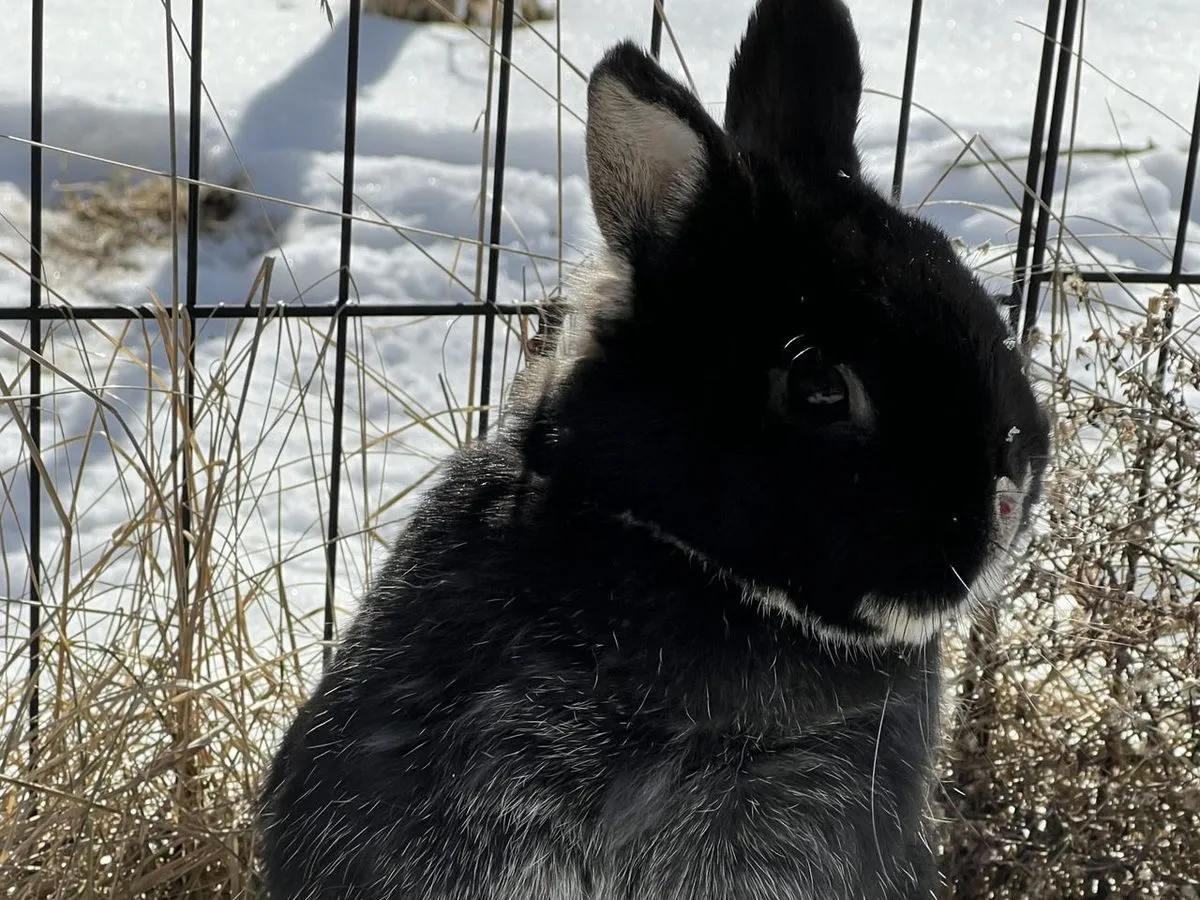
For animals in an outdoor enclosure, winter brings an extra pitfall: food that’s too cold or freezes. The German pet trade association ZZF (Zentralverband Zoologischer Fachbetriebe) (in German) warns that frozen or overly cold food can cause stomach and gut problems. So only offer fresh fruit and vegetables in amounts that get eaten straight away. In its information sheets on keeping rabbits outdoors (in German) and keeping guinea pigs outdoors (PDF, in German), the Tierschutzbund also recommends a feeding spot inside the shelter, so nobody has to go out into the cold to eat.
More energy for animals living outdoors
Animals that spend the winter outside need more energy. The Tierschutzbund advises offering plenty of energy-rich food from autumn onwards so they can build up fat reserves, along with lots of vitamin C-rich greens. What that means in practice varies from animal to animal: the TVT considers many pellet and cereal mixes unsuitable because they are too high in sugar and energy. According to the TVT, a suitable dry food may become necessary for animals kept outdoors in sub-zero temperatures, but only after talking to a vet with experience in rabbits.
Introduce new foods slowly
Since winter often brings new vegetables onto the menu, patience is key. According to the Tierspital Zürich, a change of diet has to happen slowly, over 14 days, or the animals will get diarrhoea. The Tierschutzbund recommends giving new fresh food “leaf by leaf” at first. One leaf today, a little more in a few days, and in between, a look at the droppings.
If your pet stops eating
If your rabbit stops eating, the TVT says that is always an emergency. In guinea pigs, too, a break from eating is a serious warning sign, because according to Prof. Gille their gut depends on a regular supply of new food. In that case, or if there’s diarrhoea or noticeable weight loss, call your vet.
Frequently asked questions about fresh food in winter
What do rabbits and guinea pigs eat in winter?
Hay is always available. On top of that comes fresh food every day, mainly leafy vegetables, salad leaves such as lamb’s lettuce or chicory, vegetable tops and herbs, and cabbage once they’re used to it. Root vegetables and fruit are given only sparingly.
Is hay alone enough in winter?
Not in the long run. The TVT recommends a balanced mix of fresh food every day alongside hay, and for guinea pigs fresh food is also the most important source of vitamin C. Fresh water must always be available as well.
Can rabbits and guinea pigs eat frozen fresh food?
Better not. According to the ZZF, frozen or overly cold food can cause stomach and gut problems. Only give as much as gets eaten straight away, and remove any frozen leftovers.
Do guinea pigs need extra vitamin C in winter?
Guinea pigs need vitamin C every day all year round, because they can’t make it themselves. The TVT recommends covering their needs preferably through fresh food. Whether a supplement is needed as well is something to decide with your vet. Rabbits make their own vitamin C.
Is cabbage a good choice in winter?
Cabbage such as savoy or Chinese cabbage is a handy winter vegetable. What matters is that you introduce it slowly so the gut flora can get used to it. Both the TVT and the Tierschutzbund stress this.
How do I stop fresh food from freezing?
When it’s freezing, give several small portions a day, offer them under cover, for example at a feeding spot inside the shelter, and take leftovers back into the house after the meal. How to winterproof the shelter and water is explained in our guide to keeping rabbits and guinea pigs outside in winter.


