
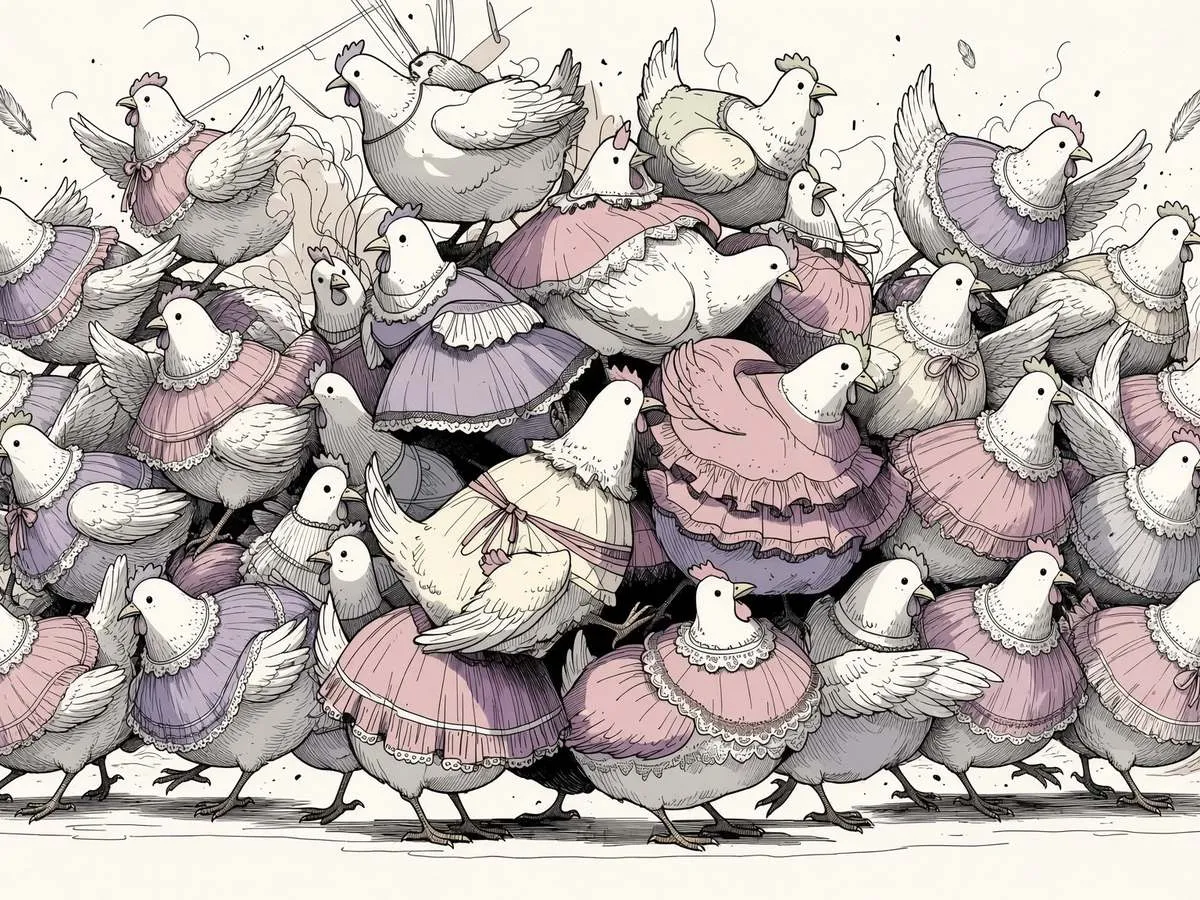
Keeping Chickens in the Garden: What to Know Before the Ladies Move In
Translated from our German original. Any rules and regulations mentioned refer to Germany and may differ where you live.
Keeping chickens in the garden sounds like a country idyll: a warm egg in the morning, clucking company while you weed in the afternoon. And it really can be that lovely. But chickens aren’t egg machines with feathers. They are curious, sociable animals with minds of their own, and legally they count as farm animals even in the smallest garden. Here you’ll find out what to sort out before they move in, what the coop and run should look like and what everyday life with chickens is really like. If you’re in a hurry, jump straight to Can I keep chickens in my garden?
Chickens as pets: charming, but no sofa companions
Chickens are flock animals. They must not be kept on their own, and according to the German animal welfare organisation aktion tier (in German), the smallest group should be three to five birds. The Swiss animal welfare organisation Zürcher Tierschutz (in German) and the brochure “Huhn im Glück” (“Happy Hen”) published by the Austrian state of Burgenland (PDF, in German) also say at least three. Chickens don’t belong indoors: without an outdoor run they can neither scratch nor take dust baths, and aktion tier considers that unsuitable for the species.
Plan for the long term, too: according to aktion tier, chickens live five to seven years on average, and according to the Burgenland brochure up to 14 years. If you like animals that not everyone has, you’ll find more unusual pets on our site. If you’re looking for something that’s little work, you’re better off with genuinely low-maintenance pets, because chickens need looking after every single day.
Checklist before you start
Before you put your first chicken coop in your shopping basket, go through these points:
- Permission from your landlord or allotment association if you’re not keeping them in your own garden
- A chat with the neighbours, especially if a rooster is on the cards
- A check with your municipality on whether the coop needs a permit
- Registration with the veterinary office and, in Germany, the Tierseuchenkasse (animal disease fund) before they move in
- A vet practice that knows poultry, and vaccination against Newcastle disease
- A coop big enough for weeks indoors if a housing order comes in
- Cover for holidays and illness, 365 days a year
- A plan for when the hens stop laying
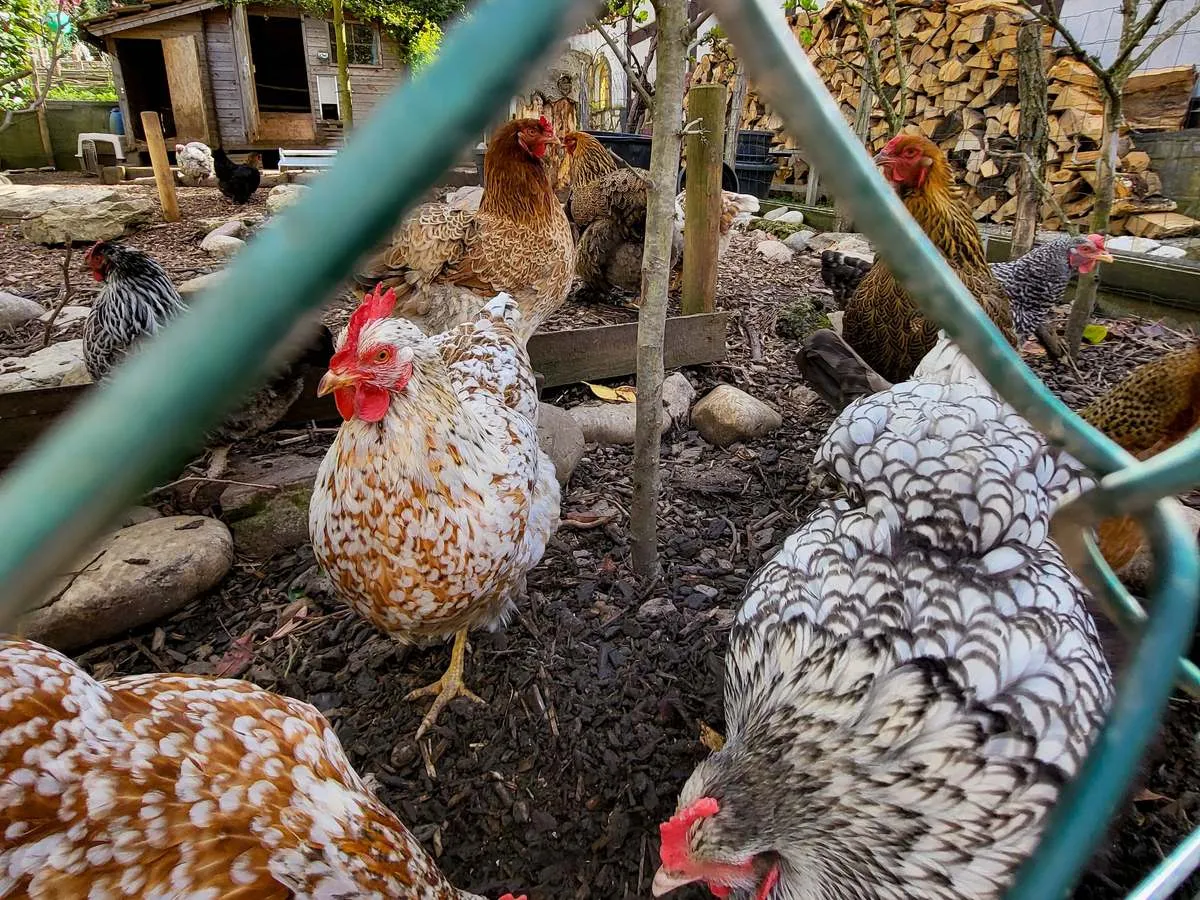
Can I keep chickens in my garden?
Owning, renting and allotments
If you own a house with a garden, you’re generally allowed to keep chickens there, writes Germany’s Federal Information Centre for Agriculture (BZL) (in German). If you rent, you need your landlord’s permission, and for a shared garden the BZL thinks a refusal is more likely. Only very few allotment sites allow poultry, either.
Even in your own garden, keeping chickens has to suit the residential area. The Würzburg district office (Landratsamt, in German) explains this using Germany’s Land Use Ordinance (Baunutzungsverordnung): keeping small animals is permitted in a residential area as long as it stays on a private scale, for example for your own household’s eggs. A local development plan (Bebauungsplan) can set different rules. According to the BZL, there is no fixed upper limit; courts have mostly considered around 20 birds reasonable, though that’s no guarantee.
Does the coop need planning permission?
That varies a lot from region to region, the BZL stresses: it depends on the size, the distance to your neighbours and whether the coop is fixed or mobile. In Bavaria, according to the Würzburg district office, buildings with a gross volume of up to 75 cubic metres don’t need a permit, but the required distances to the boundary still have to be right. Other German states have different rules, and in Switzerland it depends on the canton and the size of the coop, according to Zürcher Tierschutz. So ask your municipality or local building authority (Bauamt) first.
Register before the first chicken moves in
This is where it gets serious, and from the very first chicken. Under Section 26 of the German Livestock Movement Ordinance (Viehverkehrsverordnung) (in German), you must notify the responsible veterinary office before you start keeping chickens, giving your name, address, the expected average number of birds over the year, the type of use and the location. According to the Tierseuchenkasse Rheinland-Pfalz and the Tirschenreuth district (both in German), this applies regardless of flock size, so it covers three hens in the garden too. On top of that comes registration with the Tierseuchenkasse, the animal disease fund of your federal state, which also applies from the first bird, for example in Hesse or Saxony (both in German). Small fees may apply, and the procedure differs from state to state.
According to the Bavarian State Office for Health and Food Safety (LGL) (PDF, in German), you also have to keep a flock register in which you record every bird that arrives or leaves, and keep it for three years. Sounds like a lot of paperwork for three chickens, but in an outbreak the authorities need to know where poultry lives.
In Austria, according to the City of Vienna (in German), you have to register keeping poultry with the district administrative authority within seven days, and in Switzerland, according to Zürcher Tierschutz, you have to register with the cantonal office.
Coop, run and protection from foxes
The coop
According to the BZL, there are no legal minimum dimensions for hobby flocks in Germany, but there are recommendations. According to aktion tier, each chicken needs at least 0.5, better 1 square metre of floor space in the coop, so that it can live there comfortably even during a housing order. Zürcher Tierschutz gives a minimum floor area of two square metres for the whole coop, and the BZL a maximum of three birds per square metre.
According to the BZL, the coop needs windows for daylight, raised perches for sleeping, one nest box for every two to three hens, food, water and bedding such as wood shavings or chopped straw. It should be dry, well ventilated and free of draughts, says the LGL.
The run
Chickens want to scratch, peck, dust-bathe and hide under bushes. aktion tier recommends at least 10, better 20 square metres of run per chicken, Zürcher Tierschutz 10 to 15, and the Würzburg district office about 20. If you’re short on space, the BZL suggests keeping fewer birds or bantams. Shrubs offer protection from birds of prey, and a run split into several sections lets the grass grow back. Otherwise, three weeks in, your garden will look like a ploughed field.
Foxes, martens and co.
To a fox or a marten, a flock of chickens is an all-you-can-eat buffet, and according to the Burgenland brochure both live in towns too. At night, the chickens belong in a closed coop, ideally one that locks, and every evening you count heads. The fence should be around two metres high and secured at the bottom against digging.
Choosing a breed as a beginner
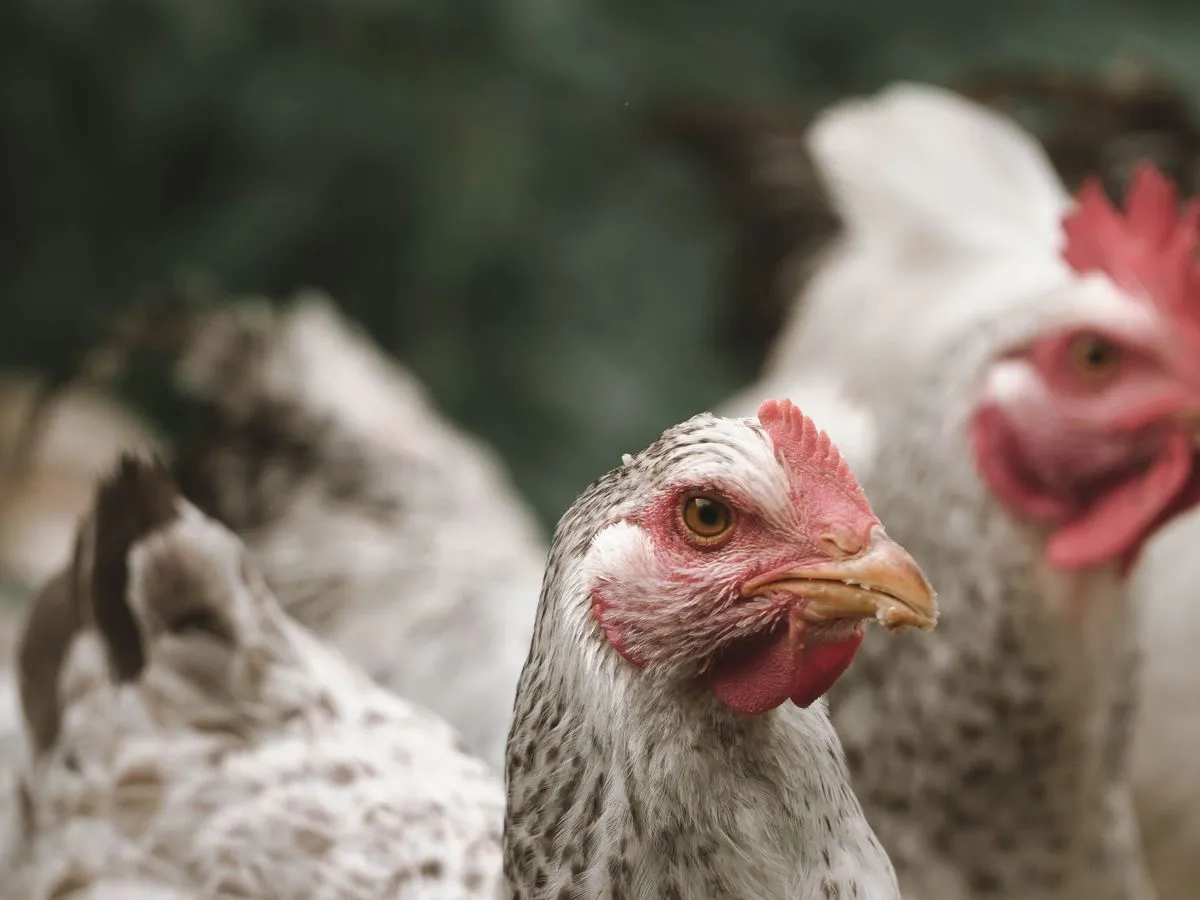
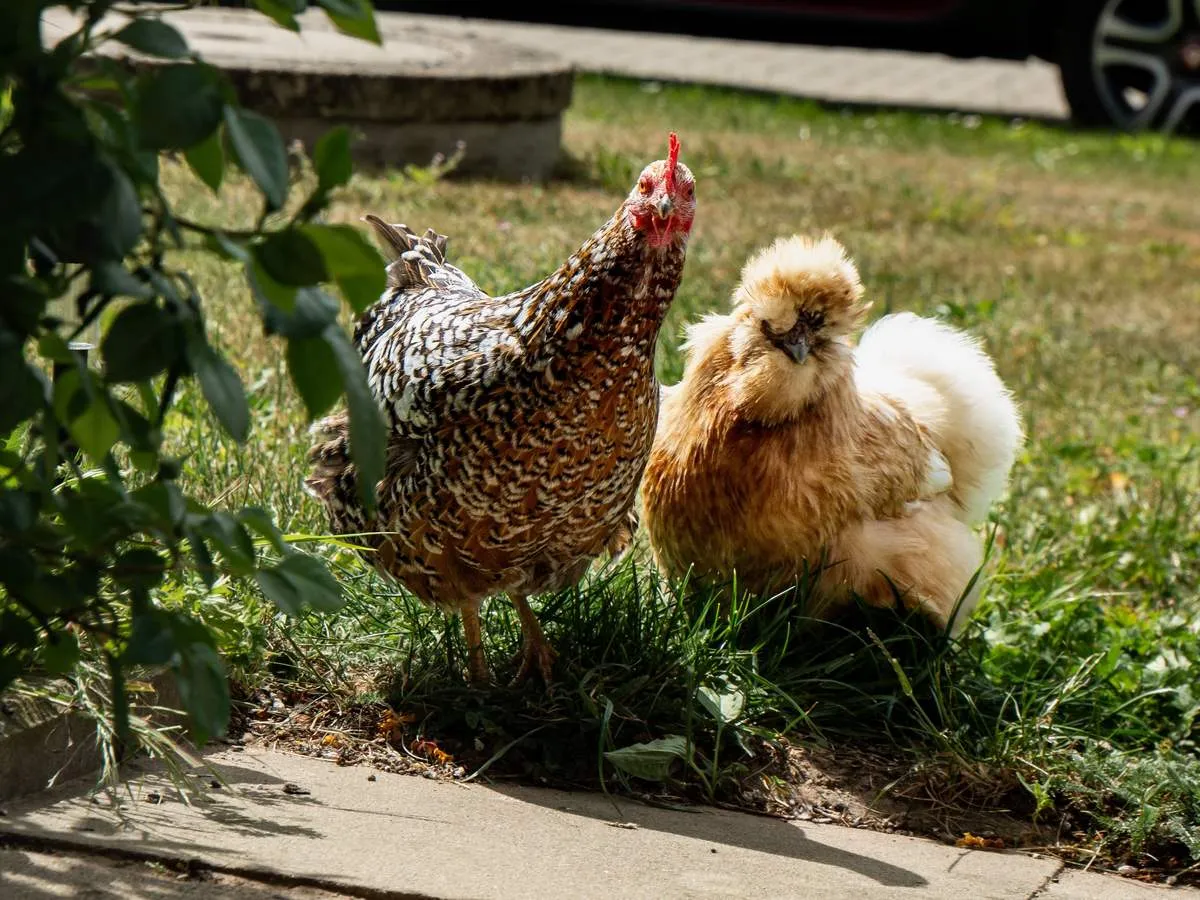
Don’t go by looks alone. For beginners, the Burgenland brochure recommends hardy, undemanding breeds. Less suitable are, for example, chickens with a large crest or Silkies, whose plumage doesn’t keep the rain out well. aktion tier recommends traditional dual-purpose breeds such as Wyandotte or Sussex, which also cope well with the cold. Many old breeds are on the Red List of endangered livestock breeds.
Another option is ex-commercial laying hens. According to the BZL, they are taken out of production after about 16 to 17 months, but in a private home they often keep laying for a while. Several initiatives rehome them, and at first they often look rather ragged. If giving rescue animals a home appeals to you, also read our article on adopting pets from a shelter.
Roosters, noise and keeping the peace with the neighbours
The good news: hens lay eggs without a rooster too, as the BZL and aktion tier confirm. You only need a rooster if you want chicks.
A rooster crows, Sunday at five in the morning included. In May 2024, the Higher Administrative Court of North Rhine-Westphalia (OVG NRW) (in German) confirmed that the city of Düsseldorf was entitled to ban chicken keepers in a general residential area from keeping their rooster “Bigfoot”; the four hens were allowed to stay. What mattered wasn’t how often he crowed, but whether a rooster fits into a residential area with such small plots. It remains a decision on the individual case. So talk to your neighbours before you get chickens; the BZL, aktion tier and the Würzburg district office all agree on that. A few free eggs over the fence have headed off many a dispute.
Everyday life: feed, time, eggs and muck
What chickens eat, and what they don’t
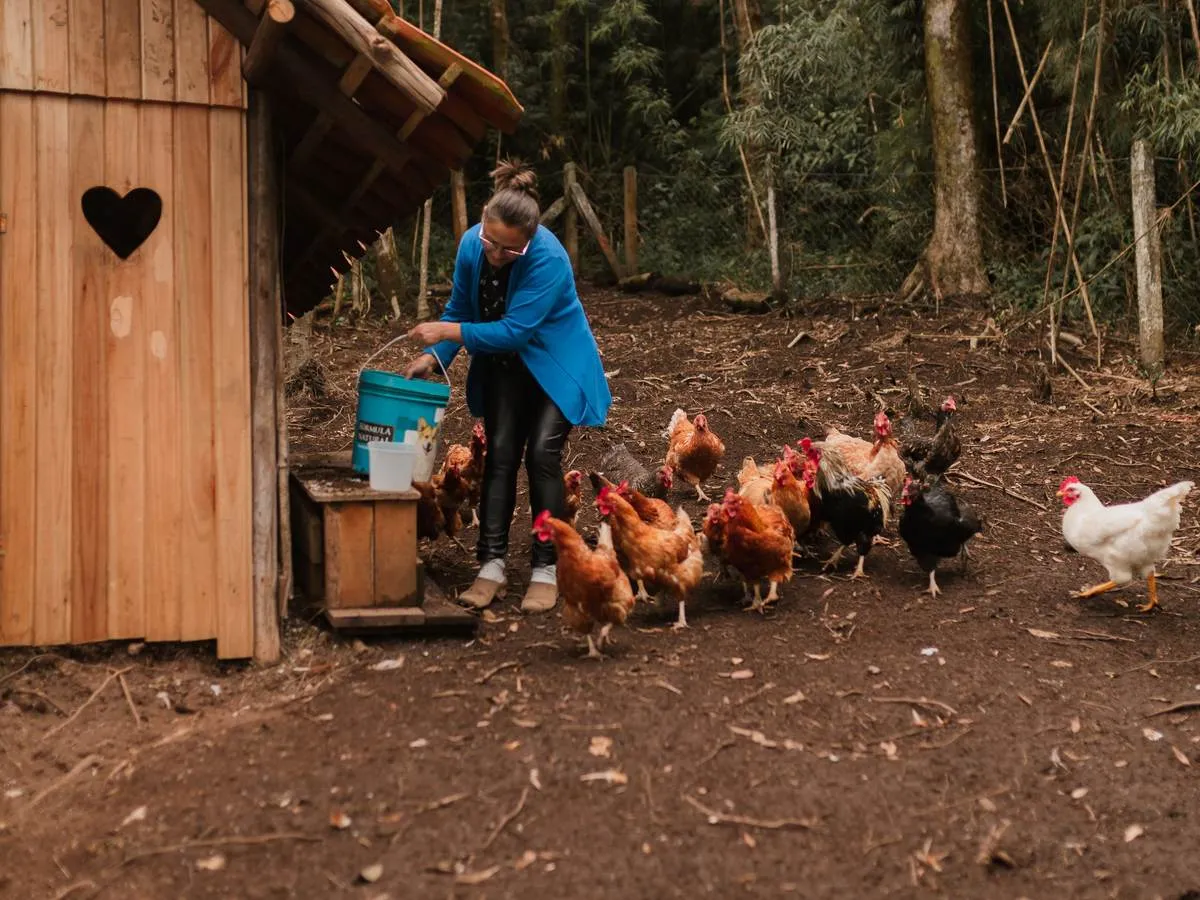
The basis is a complete feed for laying hens, plus grain, greens, a little fruit and vegetables, and grit, which helps them grind up their food. Fresh water must always be available.
Leftovers are off limits. Even hobby hens are legally farm animals, and under Article 11 of EU Regulation 1069/2009, farm animals must not be fed kitchen and catering waste. So the leftover pasta from lunch goes in the food waste bin, not the run. The veterinary office of the city of Halle (in German) stresses that the ban also applies to private flocks, and that eggs and eggshells must not be fed to chickens either. When it comes to purely plant-based kitchen scraps, authorities interpret the rules more or less strictly. You’re on the safe side with fresh vegetables that you set aside specifically as feed, and if in doubt, ask your veterinary office.
Time
According to the BZL, reckon on about 15 to 20 minutes a day: open the pop hole in the morning and close it in the evening, feed, top up the water, collect the eggs and take a quick look at the birds. On top of that comes regular mucking out, fresh bedding and cleaning the coop. For holidays and illness, the Burgenland brochure advises lining up several stand-ins right away.
Costs
The BZL puts the price of a chicken at 10 to 40 euros, depending on the breed, and special pedigree birds can cost as much as 150 euros. Then there’s the coop, the fence and running costs for feed, bedding, vaccination and the vet. The Burgenland brochure is honest about it: the costs usually exceed what you save on buying eggs. So your breakfast egg probably won’t work out cheaper than the supermarket one.
Eggs and salmonella
Home-laid eggs aren’t automatically germ-free. According to Germany’s Federal Institute for Risk Assessment (BfR) (in German), hens that look healthy can pass salmonella and campylobacter on to their eggs. Store eggs in the fridge at four to six °C and heat them for at least two minutes to a core temperature of at least 70 °C. Wash your hands after visiting the coop. If you want to pass eggs on to other people, you first have to register as a food business, according to the Würzburg district office; ask your local food safety authority about this.
Health, vaccination and bird flu
Compulsory vaccination against Newcastle disease
In Germany, under Section 7 of the Fowl Plague Ordinance (Geflügelpest-Verordnung) (in German), all chickens must be vaccinated against Newcastle disease, regardless of the number of birds and in hobby flocks too. In German it is also called “atypical fowl plague”, but it isn’t bird flu. The vaccine is usually given via the drinking water, according to the BZL generally every six weeks, but the information for the specific vaccine is what counts. You can get the vaccine through your vet and, in some places, through poultry breeding clubs.
Bird flu and housing orders
According to the BZL, vaccinating against bird flu is not allowed in Germany, so the only thing that helps is keeping your flock away from wild birds. When the risk is high, the veterinary office can order poultry to be kept indoors, and according to the LGL this housing order also applies to small hobby flocks, unless the order provides for an exemption. The chickens then have to stay in the coop or under a protective structure that keeps wild birds out.
The situation in autumn 2026: according to its risk assessment of 6 November, Germany’s Friedrich-Loeffler-Institut (in German) expects further cases and rates the risk of wild birds carrying the virus into poultry flocks as high. So far, mainly northern Germany is affected. Whether a housing order applies where you live is decided by your district. Check your veterinary office’s website, because the situation is currently changing week by week.
Mites, moulting and the vet
One dreaded lodger is the red poultry mite: hiding in cracks by day, sucking blood at night, and according to the Burgenland brochure very hard to get rid of. Check perches, nest boxes and cracks regularly. Discuss treatments for an infestation with your vet, not least because of withdrawal periods for the eggs.
Moulting, on the other hand, isn’t an illness: once a year, usually in late summer or autumn, chickens replace their plumage. Depending on the bird, this takes four weeks to about three months, and during that time they lay little or not at all, according to Zürcher Tierschutz and the Burgenland brochure. If a chicken stops eating or seems listless, it needs a practice that knows about poultry. Find one before your flock moves in, because not every small-animal practice treats chickens.
Winter
Healthy chickens usually cope well with the cold; they simply fluff themselves up. Damp is more of a problem. Zürcher Tierschutz recommends a dry, draught-free coop and a drinker heater so that the water doesn’t freeze. In winter, chickens eat about 20 percent more.
When the eggs stop coming
Sooner or later, every hen lays less. That happens quite naturally in winter, and with age, according to the Burgenland brochure, chickens stop altogether at seven to ten years, depending on the breed. Killing a chicken for that reason is not allowed in Germany: under animal welfare law, killing an animal requires a reasonable cause, and according to the LGL, poor laying or a loud rooster are expressly not among them. Rehoming is difficult, too, because according to aktion tier, animal shelters are usually not allowed to take in farm animals.
So decide before you buy that your hens can retire with you. A senior hen with no eggs still scratches, sunbathes and comments on your gardening. You’ll find more ideas and guides about animals in our other pet care tips.
Frequently asked questions about keeping chickens in the garden
Do I have to register chickens even if I only have three?
In Germany, yes. There, you register even the first chicken with the veterinary office and with the Tierseuchenkasse (animal disease fund) of your federal state before it moves in. Austria and Switzerland have their own registration requirements, and elsewhere your local veterinary or agricultural authority can tell you what applies.
How many chickens should I keep at least?
At least three. Chickens are flock animals. The upper limit is mainly set by space: experts recommend around 10 to 20 square metres of run per chicken.
Do I need a rooster for my hens to lay eggs?
No. Hens lay without a rooster too. You only need a rooster if you want chicks. In residential areas, a rooster’s crowing can lead to trouble, and in individual cases even to an official ban.
Can I give my chickens leftovers?
No. Chickens legally count as farm animals, and under EU law farm animals must not be fed kitchen and catering waste, even in hobby flocks. Fresh vegetables or fruit that you set aside specifically as feed are fine as a supplement to complete feed.
What should I do about bird flu?
Keep feed and water away from wild birds, and check with your veterinary office whether a housing order applies. If several birds die or egg production drops by more than 5 percent, call your vet straight away.
How much time does keeping chickens take?
About 15 to 20 minutes a day for feeding, water, eggs and the pop hole, plus regular mucking out. And that’s every day, holidays included.


