
Australia: Captive-Bred Broad-Headed Snakes Survive First Months in the Wild
One of Australia’s most endangered snakes has been given a promising start back in the wild. Researchers at the University of Technology Sydney (UTS) report that at least four of six captive-bred juvenile broad-headed snakes have survived their first few months after release.
A pilot release in New South Wales
As UTS reports, the reintroduction is led by wildlife ecologist Professor Jonathan Webb together with the conservation organisation Aussie Ark and Traditional Owners of the Shoalhaven region. Aussie Ark’s breeding programme started in October 2024 and has produced eight snakes so far. Two were kept back because of their valuable genetics, and six were released at habitat restoration sites in mid-May 2026. The team has surveyed them every fortnight since.
The university describes the project as the first reintroduction of this species. Webb calls the results so far “really encouraging”, while stressing that it is a pilot study meant to guide future releases. Captive-bred juveniles face real risks after release, including native predators such as kookaburras and introduced ones such as cats and foxes.
Why rocks matter so much
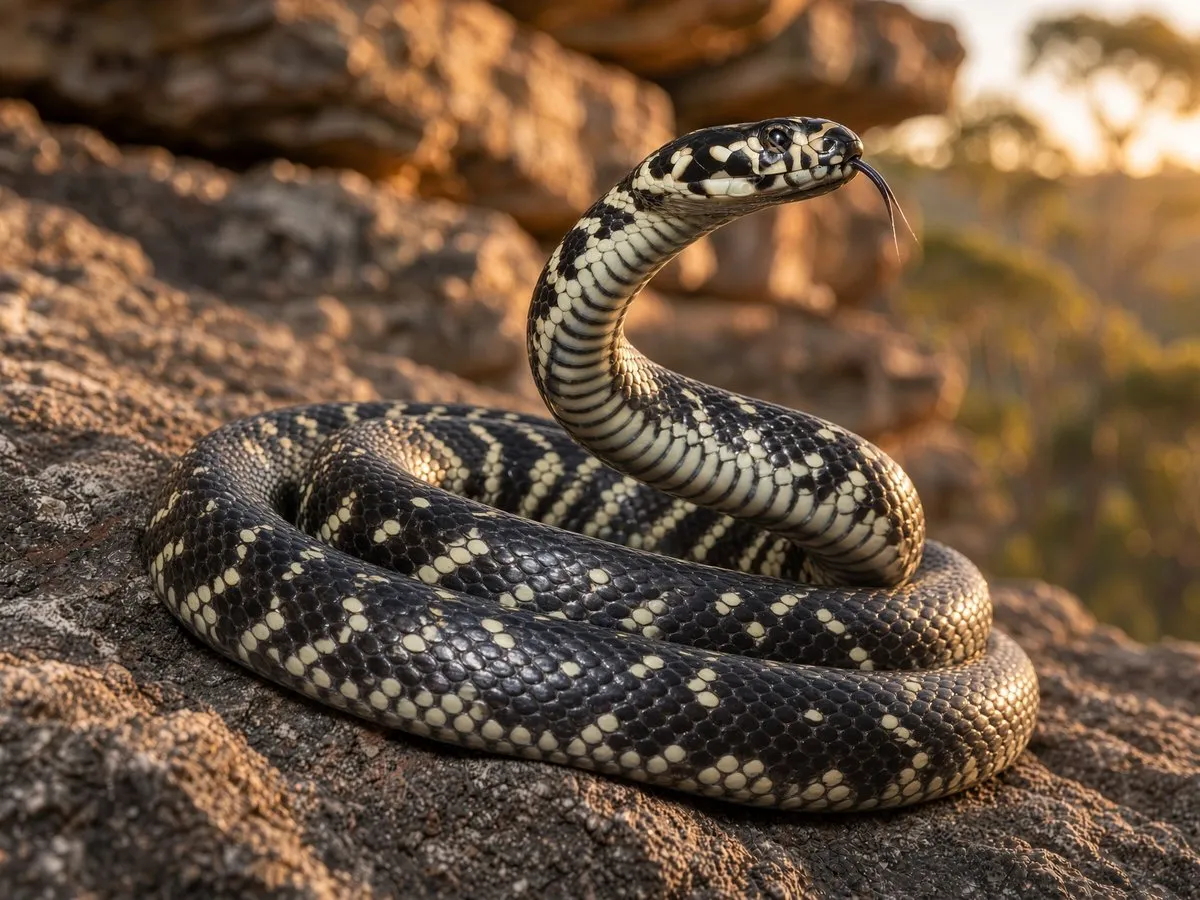
The broad-headed snake has a flattened head and a black body with yellow bands. It lives only in the rocky sandstone country around Sydney. According to UTS, it grows slowly: it can take five years to reach adulthood, and females breed only every two or three years. Even small losses can therefore take decades to recover.
Webb has studied one population in Morton National Park for more than three decades. In that monitored population, the 2017–19 drought and the 2020 bushfires, followed by three years with little breeding, contributed to a decline of around 64 per cent by 2023. The removal of bush rocks, often sold for landscaping, is another major threat, because young snakes shelter under rocks and hunt small lizards that live there. Webb is calling for a permit system to stop rocks being taken from threatened species habitat.
For the release, the team used artificial rocks designed by Dr Benjamin Croak, with the right crevice size and heat properties. According to Webb, they have been critical to the young snakes’ survival.
More than a conservation project
The programme also trains and supports Indigenous rangers to monitor the species on Country. Traditional Owners involved say it helps pass knowledge on to younger generations.
Over the next few years, the team plans to restore more habitat and release further captive-bred snakes at selected sites. Whether the wild population recovers will only become clear over time – but for a species that reproduces this slowly, a successful first step is good news.
If you spend time in the bush, the simplest way to help reptiles like this one is to leave rocks, logs and other natural shelters where you find them.
Source: University of Technology Sydney (UTS): „World-first successful wild release of endangered broad-headed snake“, 11/06/2026