
Poinsettia, Mistletoe and More: These Christmas Plants Are Toxic to Pets
Translated from our German original. Any rules and regulations mentioned refer to Germany and may differ where you live.
A red poinsettia on the windowsill, a sprig of mistletoe above the door, holly in the Advent wreath and a bunch of lilies on the table: for many people, plants are part of the festive season. For your dog, cat, rabbit or budgie, though, the new greenery isn’t always harmless. How toxic a Christmas plant is depends heavily on the plant, the amount eaten and the species. The poinsettia mostly irritates the mouth and stomach, the Christmas rose is rated as very highly toxic, and lilies are life-threatening to cats in even the tiniest amounts. Here you’ll find out which plants are how dangerous, which animals are most at risk, how to recognise poisoning and which alternatives are available. If your pet has just nibbled something, jump straight to Signs of poisoning and what to do straight away.
How serious the issue is was shown by a warning from the animal welfare organisation aktion tier e. V. on 26 October 2026 (in German): ahead of All Saints’ Day, vet Dr Tina Hölscher pointed out that lilies in flower arrangements are life-threatening to cats. But lilies don’t only feature in memorial arrangements. According to International Cat Care, they commonly appear in bouquets and flower arrangements too, including the ones given as Christmas presents. The Swiss poisons information centre Tox Info Suisse (in German) also sees more enquiries about festive decorative plants every year around Advent and New Year. At Christmas, the poinsettia tops its list of enquiries.
This article focuses on the typical plants of Advent and Christmas. To find out which houseplants are dangerous to cats all year round, including the amaryllis, read our article Beware, Poisonous! Houseplants Dangerous for Cats. Tinsel, gift ribbon and the Christmas tree are covered in Holiday Season – Hazard Season.
Why decorating with plants is a risk
Anything new that comes into the home can arouse the curiosity of dogs, cats, small mammals and pet birds. The German pet trade association ZZF (Zentralverband Zoologischer Fachbetriebe) (in German) points this out, especially with regard to young animals. Even calm or older animals might suddenly treat the Advent wreath and nativity figures as toys. According to International Cat Care, indoor cats and kittens in particular are more likely to interact with flowers and arrangements, because they add interest to an otherwise familiar environment.
On top of that, the dose makes the poison. The German Animal Welfare Federation (Deutscher Tierschutzbund) (in German) stresses that, depending on the amount eaten and the animal’s size and state of health, the same substance may cause only mild symptoms or become life-threatening. Small animals such as rabbits or birds may therefore be affected by smaller amounts.
You may wonder why sources rate the same plant so differently. One reason is that many reassuring statements refer to people. Tox Info Suisse cites a US analysis of more than 26,000 enquiries about poinsettia, holly and mistletoe, most of them involving young children. 96 per cent of those affected had no symptoms. But children usually only taste small amounts. In animals, on the other hand, Tox Info Suisse knows of severe and fatal cases involving poinsettia, mostly after large amounts. So for your pet, a plant considered only mildly toxic to people isn’t automatically harmless.
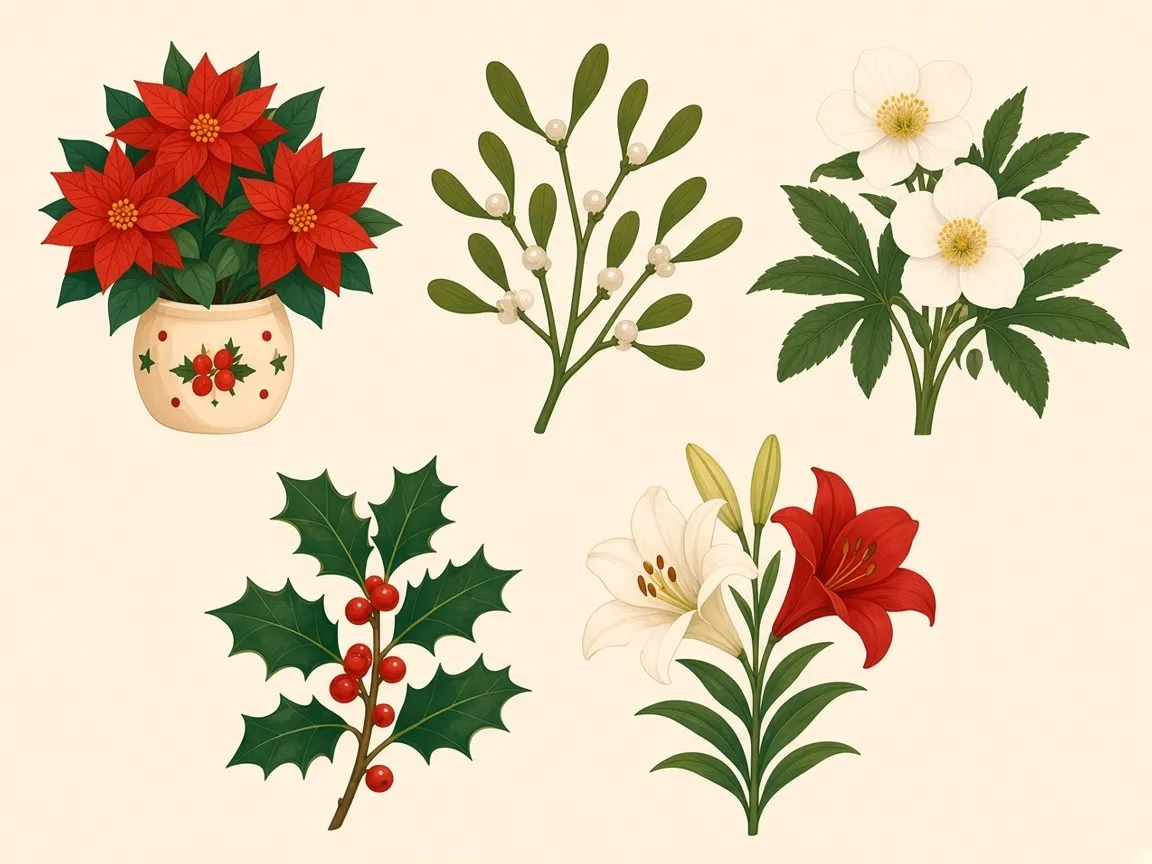
Poinsettia, mistletoe, Christmas rose and holly at a glance
The table below summarises how specialist sources rate the most important Christmas plants. The ratings mainly come from the poisonous plants database CliniTox (in German) run by the Institute of Veterinary Pharmacology and Toxicology at the University of Zurich.
| Plant | Toxic parts | Rating | Key point |
|---|---|---|---|
| Poinsettia | milky sap in all parts of the plant | CliniTox: highly toxic; usually mild stomach and gut upset | opinions differ, not harmless |
| Mistletoe | whole plant; berries not or only slightly toxic according to Tox Info Suisse | CliniTox: mildly toxic | irritates the stomach and gut |
| Christmas rose | whole plant | CliniTox: very highly toxic | can affect the heart |
| Holly | red berries and leaves | CliniTox: toxic | spiny leaves can injure the mouth |
| Lilies | all parts, including pollen and vase water | extremely dangerous to cats | kidney failure in cats |
Poinsettia: usually an irritant, but not harmless
The poinsettia (Euphorbia pulcherrima) belongs to the spurge family and contains a white milky sap that can irritate the skin and mucous membranes. Expert opinions differ more on the poinsettia than on any other plant here. The US animal welfare organisation ASPCA lists it as toxic to dogs, cats and horses, but says it irritates the mouth and stomach, sometimes causes vomiting and is generally over-rated in toxicity. CliniTox lists it as highly toxic, but describes the typical result as mostly mild gastroenteritis with vomiting. According to CliniTox, there are also non-toxic cultivars, but they can’t be told apart from toxic ones by appearance. Because of its sharp, unpleasant smell, the poinsettia is rarely eaten, CliniTox notes.
The Poisons Information Centre Bonn (in German) explains that strongly irritant substances have only been found in the wild form, not in the commercial cultivars. However, isolated severe cases have been described in pets. Tox Info Suisse reports severe and fatal cases with bloody diarrhoea in cats and dogs, mostly after large amounts. The German Animal Welfare Federation does not rule out a fatal outcome in smaller animals. The bottom line: in most cases, it stays at irritation of the mouth, stomach and gut. Even so, keep the poinsettia out of your pets’ reach, especially if small pets or birds roam freely in your home.
Mistletoe: mildly toxic, but not a snack
The mistletoe native to Europe (Viscum album) is mildly toxic (in German) in all parts, according to CliniTox. Its compounds irritate the lining of the digestive tract, but are hardly absorbed through the mouth. In dogs, CliniTox lists drooling, vomiting and diarrhoea, among other signs. According to Tox Info Suisse, the white berries are not toxic or only slightly toxic, but the rest of the plant is. The ZZF advises caution with pet birds, dogs, cats and rodents, because mistletoe can cause vomiting and breathing difficulties.
A note if you read North American sources: there, a different mistletoe species (Phoradendron) usually hangs above the door. For this one, the ASPCA lists breathing difficulties, a low heart rate and, rarely, low blood pressure in addition to vomiting and diarrhoea. This information can’t be transferred one-to-one to European mistletoe.
Christmas rose: the most dangerous of the classic winter plants
The Christmas rose (Helleborus niger), also known as black hellebore, flowers in winter and often decorates front doors, balconies and gardens. CliniTox rates it as very highly toxic (in German). The whole plant is toxic. Among other things, it contains substances that affect the heart. Possible effects include severe vomiting, bloody diarrhoea, heart rhythm disturbances and seizures. For the Christmas rose, the ASPCA lists drooling, abdominal pain, diarrhoea, colic and depression in dogs, cats and horses.
Tox Info Suisse rarely receives enquiries about the Christmas rose. Compared with other plants, however, animals are noticeably often affected, probably because the plant is usually kept outdoors. If you have a dog in the garden or a cat that goes outside, keep a particularly close eye on the Christmas rose.
Holly: berries and spiny leaves
With its red berries, holly (Ilex aquifolium) is a popular addition to Advent wreaths. According to CliniTox, it is toxic (in German), especially the berries and leaves. In small animals such as dogs and cats, it usually causes mild to moderate stomach and gut problems: drooling, vomiting, loss of appetite, diarrhoea, head shaking and lip smacking. The spiny leaves can also injure the lining of the mouth. According to CliniTox, larger amounts can block the digestive tract. The ASPCA rates the leaves and berries as low in toxicity.
Lilies in bouquets: highly dangerous to cats
True lilies (Lilium) and day lilies (Hemerocallis) are among the most dangerous plants of all for cats. According to International Cat Care, eating less than one leaf, part of a flower, pollen licked off the fur while grooming, or even drinking water from the vase can be fatal. The plant damages the kidneys and can lead to kidney failure. Without treatment, according to aktion tier, the poisoning leads to acute kidney failure and death within 24 to 72 hours. So-called pollen-free lilies aren’t a safe choice either, International Cat Care says, because all parts of the plant are toxic.
The ASPCA lists true lilies as non-toxic to dogs; they are dangerous mainly to cats. Important: not everything called “lily” belongs to this group. Peace lily, calla lily and lily of the valley have different effects, according to International Cat Care. However, the German Animal Welfare Federation lists peace lily and lily of the valley as toxic to cats too.
Other candidates: yew and amaryllis
Some guides suggest using yew branches in Advent wreaths or as decoration under the tree. According to Tox Info Suisse, however, yew (in German) is highly toxic to people and animals, except for the red flesh of the berries. Severe and fatal cases are known in animals that have eaten yew branches. In homes with animals, Tox Info Suisse recommends using other evergreen branches. The amaryllis is also toxic in all its parts, the bulb most of all. You’ll find more on this in our article on poisonous houseplants.

Dogs, cats, small pets and birds: who is most at risk
The plants mentioned are toxic to many species. The German Animal Welfare Federation explicitly states that its list of poisonous plants applies to dogs, cats, rabbits, birds and rodents such as guinea pigs and hamsters. The risks differ, though.
Cats
For cats, lilies are the biggest risk at Christmas. Even pollen on the fur is enough, because cats groom themselves thoroughly. aktion tier describes exactly how this happens: the cat sniffs the flower, pollen sticks to its nose, the cat cleans its face with its paw and licks off the poison. Cats also like to nibble on greenery. According to the German Animal Welfare Federation, this is completely natural and helps them bring up swallowed fur. So offer your cat some cat grass, so it doesn’t turn to your arrangements instead. You can read about which foods are off limits in Unsafe Snacks: These Foods Are Dangerous for Cats.
Dogs
Dogs like to pick up twigs from the Advent wreath or plants in the garden. Particularly dangerous for them are the Christmas rose, which CliniTox rates as very highly toxic, and yew, which Tox Info Suisse describes as highly toxic to animals. With holly, the risk of injury from the spiny leaves adds to the toxic compounds. Lilies, on the other hand, are non-toxic to dogs, according to the ASPCA.
Small pets and birds
Rabbits, guinea pigs, hamsters and birds weigh very little, so even small amounts can make a big difference. The ZZF points out that small mammals out of their enclosure and pet birds flying free come into contact with new decorations. According to aktion tier, poinsettias aren’t good for birds either. So only let small pets and birds roam or fly freely in rooms without Christmas plants.
Young animals
Puppies, kittens and other young animals explore their surroundings with particular curiosity, often with their mouths. Both the ZZF and International Cat Care specifically mention young animals. If a young animal has just moved in with you, it’s best to do without toxic plants altogether in its first winter.
Signs of poisoning and what to do straight away
Poisoning can show itself in very different ways. Typical signs, according to the German Animal Welfare Federation (in German), CliniTox and International Cat Care, include:
- drooling, lip smacking or head shaking
- vomiting
- diarrhoea, possibly bloody
- loss of appetite and lethargy
- trembling or seizures
- difficulty breathing, pale or bluish gums
- circulatory problems
With lily poisoning, according to International Cat Care, drooling, vomiting, loss of appetite, lethargy and weakness appear within about one to six hours. Only after that can the kidneys fail. So don’t wait to see whether your cat gets worse. The sooner treatment starts, the better the chances of survival, according to aktion tier.
Here’s what to do if your pet has eaten a toxic plant or you suspect it has. The steps are based on the recommendations of the German Animal Welfare Federation and CliniTox (in German):
- Stay calm and move any plant remains out of reach.
- Call your vet or an animal hospital immediately and go there, even if you only suspect poisoning. Ideally, a second person phones ahead to let them know you’re coming.
- Take the plant or a sprig of it with you, or photograph it. Bring any chewed or vomited plant material in a plastic bag.
- Remember or note down what your pet ate, when and roughly how much.
- If your pet has plant sap on its fur or skin or in its eyes, rinse the area with lukewarm tap water, wearing gloves.
Please don’t: do not make your pet vomit, and don’t give it milk, egg white or oil. The German Animal Welfare Federation and CliniTox explicitly advise against this. Making your pet vomit yourself can injure the oesophagus or cause vomit to get into the lungs. All further steps and any treatment belong in your vet’s hands.
If you live in Switzerland, Tox Info Suisse can tell you on the emergency number 145 how dangerous the situation is for your pet and which simple first-aid measures help. For treatment, Tox Info Suisse refers you to your vet. You can find out how to make vet visits as stress-free as possible in Fear-Free Veterinary Visits.
Pet-friendly alternatives
You don’t have to go without festive greenery. Some plants are considered non-toxic to pets:
- Christmas cactus: the ASPCA lists the Christmas cactus as non-toxic to dogs, cats and horses. Tox Info Suisse describes it as harmless, but mentions possible allergic reactions after skin or eye contact.
- Cat grass: not exactly festive, but it gives your cat something it’s allowed to nibble.
- Calathea, peperomia and pilea: the German Animal Welfare Federation names these houseplants as examples of plants that are non-toxic to cats.
If you still don’t want to do without your favourite plants, a few rules help:
- If you have a cat, don’t bring lilies into your home at all. That’s International Cat Care’s advice. Ask guests not to bring lilies either, and check when buying flowers.
- Place poinsettias, Christmas roses and the like where your pets can’t reach them. Tox Info Suisse recommends this for all plants. Remember that cats are good climbers and jumpers.
- Hang mistletoe high above the door. According to Tox Info Suisse, it’s out of pets’ danger zone there.
- Regularly pick up fallen leaves, berries and flowers.
- Skip yew branches in your Advent wreath and leave out holly berries if your pet can reach the wreath.
- When buying plants and bouquets, check the label for warnings about animals, as International Cat Care recommends.
Frequently asked questions about toxic Christmas plants
Are poinsettias toxic to cats?
Yes, but usually less dramatically than often claimed. The milky sap irritates the mouth, stomach and gut; drooling and vomiting are typical. After larger amounts, Tox Info Suisse also knows of severe and fatal cases in cats and dogs. So keep your poinsettia out of reach and call your vet if your cat shows any symptoms.
Are poinsettias toxic to dogs?
Poinsettias are considered toxic to dogs too. Usually it stays at irritation and stomach and gut upset. If your dog has eaten a larger amount or shows symptoms, take it to the vet.
Which Christmas plants are most dangerous to cats?
Lilies are the most dangerous, because even the tiniest amounts, pollen or vase water can cause kidney failure. The Christmas rose is also very highly toxic, and yew is highly toxic. Poinsettia, holly and mistletoe usually cause stomach and gut problems.
My cat has been in contact with a lily. What should I do?
Go to your vet or an animal hospital immediately, even if your cat still seems well. This also applies if it only had pollen on its fur or may have drunk from the vase. Take the plant or a photo of it with you. Do not make your cat vomit.
Which Christmas plants are non-toxic to pets?
According to the ASPCA, the Christmas cactus is non-toxic to dogs, cats and horses. For cats, the German Animal Welfare Federation also names houseplants such as calathea, peperomia and pilea as non-toxic. Before buying any new plant, check whether it’s suitable for your species of pet.


