
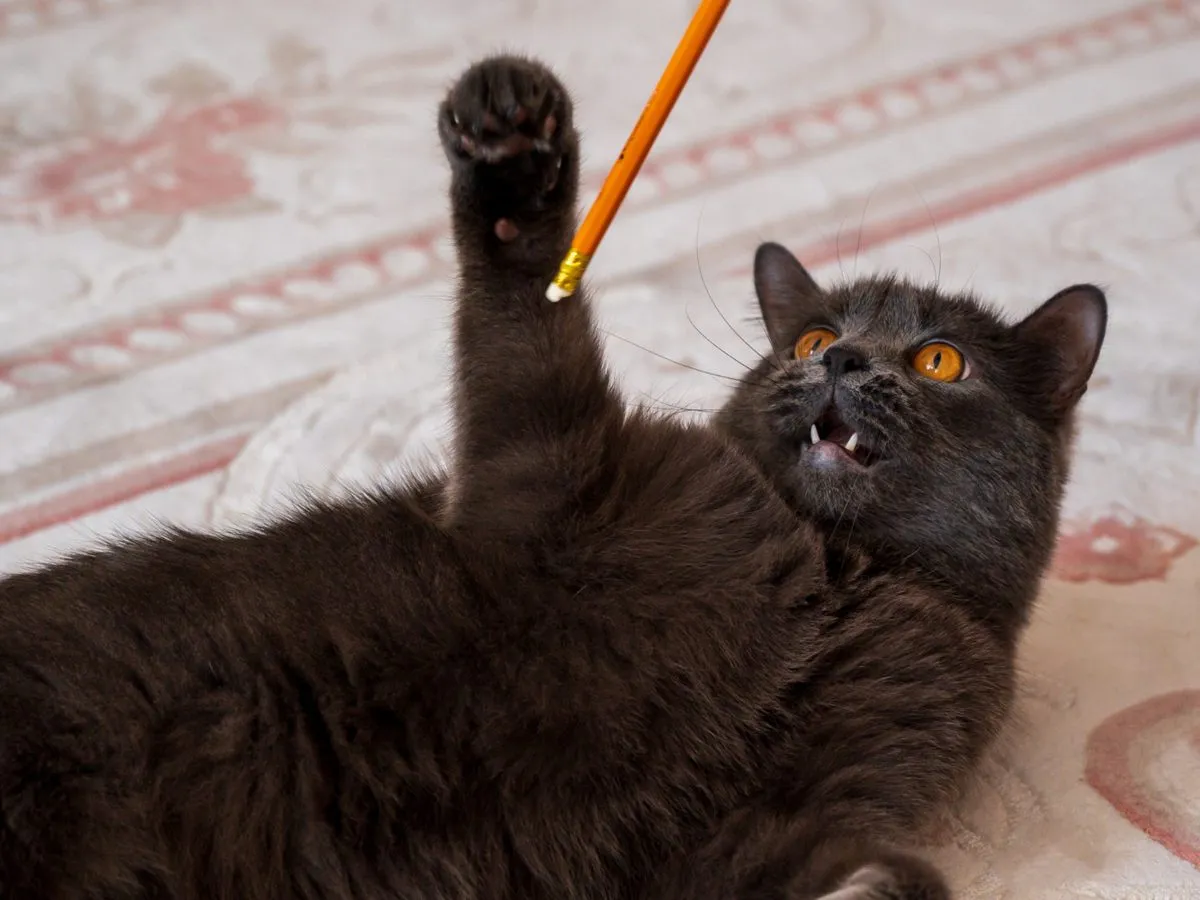
Keeping Indoor Cats Entertained in Winter: Play Ideas to Beat Boredom
Translated from our German original. Any rules and regulations mentioned refer to Germany and may differ where you live.
Outside it gets dark early, wet and cold, and indoors there’s a cat who is, at heart, a small hunter. If you want to keep your indoor cat entertained, three things help most: short hunting games with a wand toy where your cat gets to catch the “prey” at the end, food your cat has to work for, and places to climb, scratch and look out of the window. None of it costs much, and it often takes just a few minutes a day. Below you’ll find ideas with materials, time and difficulty, a simple daily plan and tips on spotting boredom. If you want to get started straight away, jump to Building playtime into your day.
A good reason for this article is a press release from the animal welfare organisation TASSO e. V. dated 13 October 2026 (in German). It notes that millions of cats in Germany live as indoor cats. According to TASSO, keeping a cat indoors only can meet its needs, but it places special demands on the cat’s living environment, and therefore on you as its owner.
Why cats need more activity in winter
According to TASSO (in German), cats are active hunters and curious explorers with a strong need for activity. Hunting behaviour is part of an indoor cat’s natural repertoire too, TASSO stresses in its press release. International Cat Care describes the difference like this: cats with outdoor access find plenty of entertainment on their own, such as walls and trees to climb, leaves to chase and new places to explore. Cats that live exclusively indoors, on the other hand, need plenty of stimulation and play so they don’t get bored.
That’s exactly the issue in winter. Indoor-only cats have nothing but their four walls all year round, and many outdoor cats also spend more time inside when it’s wet, cold and dark early. Then they miss out on everything the garden usually provides. The German Animal Welfare Federation (Deutscher Tierschutzbund) (in German) writes that cats get bored quickly, especially if they live exclusively indoors, which is why plenty of play is so important.
According to TASSO, constant under-stimulation leads to tension, stress and behavioural problems. Play, on the other hand, strengthens your bond. “It’s a misconception that we’re just can openers on two legs to our cats,” says Heike Weber, head of animal welfare at TASSO, in the press release. “Cats form very close bonds with their people.”
The dark season even has one advantage: according to International Cat Care, cats are often most active at dawn and dusk. In winter, twilight often falls right when you’re at home, in the morning or after work.
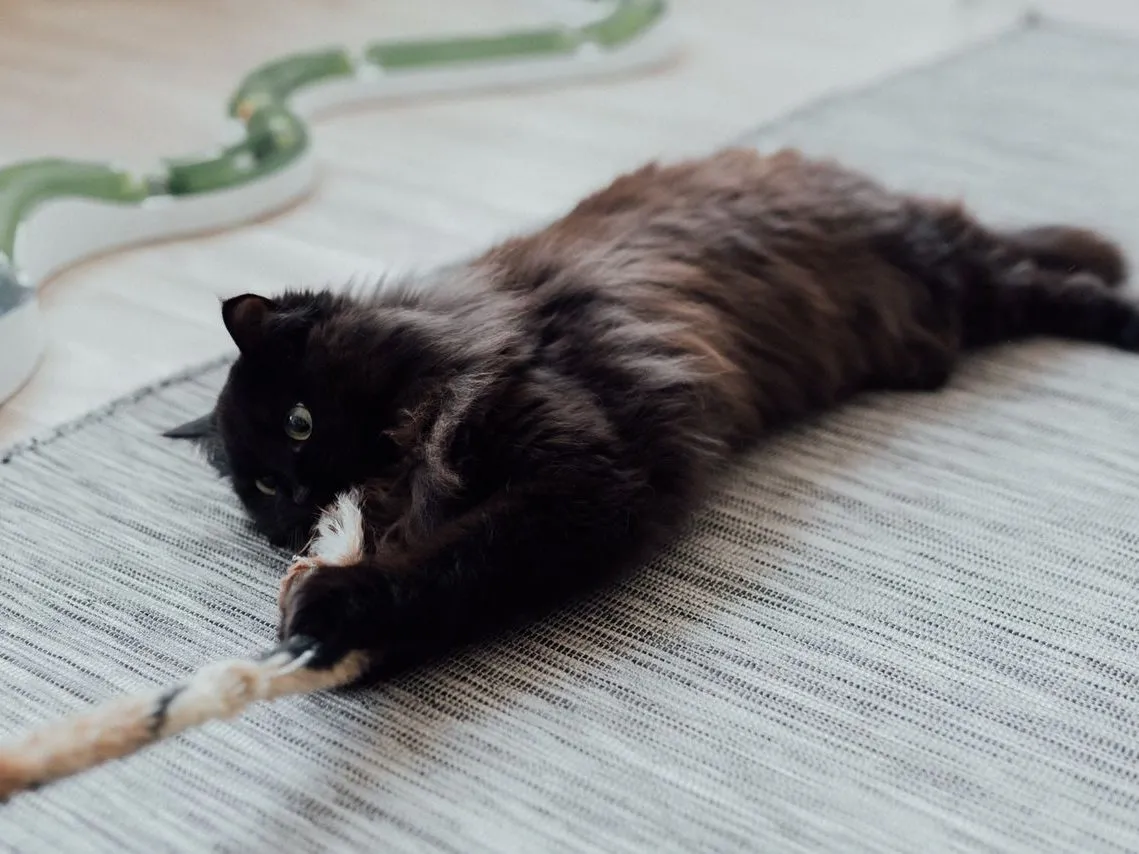
Hunting games with wand toys and more
Play mirrors the hunt in miniature: search, stalk, chase, pounce, catch and handle the prey. That’s how International Cat Care describes it. The German Pet Trade & Industry Association (Industrieverband Heimtierbedarf, IVH) (in German) also recommends shared play that picks up elements of prey-catching, and names wand toys, balls and food games as suitable examples. Which activities your cat likes best varies from cat to cat, the IVH notes. You’ll find a selection of popular toys in our article Purr-fect toys and in our Pet Toys category.
The wand toy: a classic
Materials: wand toy with feathers or a small fabric mouse · Time: a few minutes per session · Difficulty: easy
A wand toy is a rod with a string and a small toy on the end. International Cat Care advises making the toy look as “real” as possible, so small, with feathers or fur, and moving it in jerky, unpredictable movements. The AAFP and ISFM Feline Environmental Needs Guidelines recommend moving the wand the way real prey moves: swooping through the air like a bird, or quickly and in straight lines away from the cat like a mouse. The most important part comes at the end: let your cat catch the toy. According to the AAFP and ISFM, this simulates a successful hunt, and a treat after play rounds the session off.
Once play is over, the wand goes away; more on that in Staying safe during play. A nice side effect: according to the Deutscher Tierschutzbund, toys that are always lying around quickly become boring.
Small fur mice, balls and paper balls
Materials: small fabric mice, light balls, scrunched-up paper · Time: whenever · Difficulty: easy
According to the Deutscher Tierschutzbund, cats love anything that rolls, runs or flies. A scrunched-up piece of paper or a light ping-pong ball is often enough to set off a chase down the hallway. International Cat Care recommends having two or three small fur mice on the go and rotating them, offering just one at a time. Once a mouse has been “killed”, it soon loses its appeal. The AAFP and ISFM guidelines also advise rotating toys regularly to prevent habituation and boredom.
Laser pointers only with a happy ending
A laser dot lets your cat stalk, chase and pounce, but never catch. According to International Cat Care, that can be frustrating. The organisation recommends switching to a wand toy at the end so the game finishes on a positive note. You can read more about the pros and cons in our article Cats on the hunt: all about interactive laser pointers.
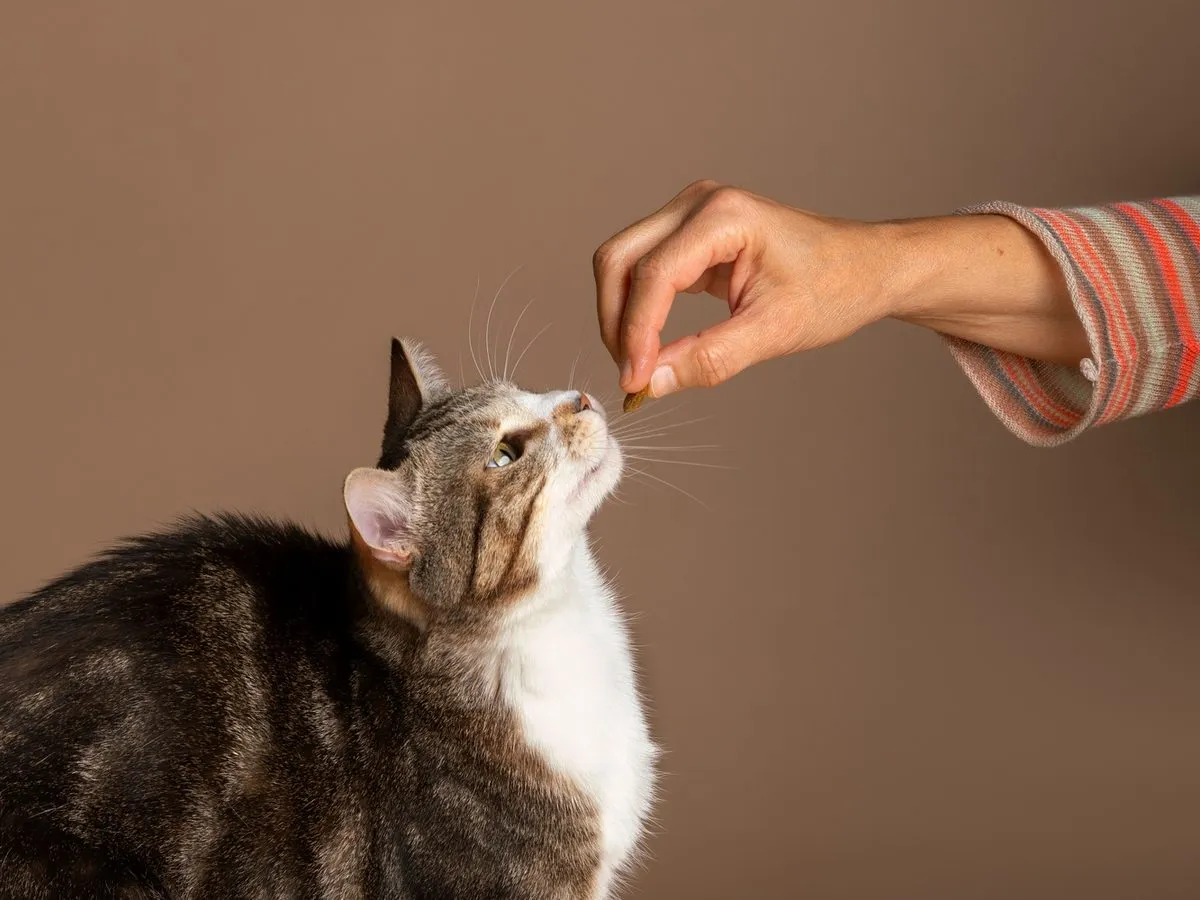
Food games and puzzle toys
In nature, cats catch up to 15 mice a day, according to the Deutscher Tierschutzbund (in German). Their stomach is therefore designed for several small meals, and the federation recommends splitting the daily ration into at least five portions. Working for food in a playful way, for example with snuffle boards, treat balls or hidden kibble, suits a cat’s natural eating behaviour and keeps the mind busy, it says. TASSO also lists food mazes and puzzle feeders as brain games that challenge cats mentally.
The authors of a paper on food puzzles for cats in the Journal of Feline Medicine and Surgery (Dantas and colleagues, 2016) describe such puzzles as a way to use cats’ natural inclination to work for their food, providing mental stimulation and more activity. Important: use part of the normal daily ration for food games, not an extra portion.
Snuffle board and treat ball
Materials: snuffle board or treat ball, dry food · Time: a few minutes to fill · Difficulty: easy to medium
According to the paper by Dantas and colleagues, there are two basic types: mobile puzzles such as balls or tubes that your cat rolls with a paw or nose, and stationary puzzles with holes, cups or channels from which your cat has to fish out the food. At first, the authors say, getting food out should be as easy as eating from the bowl. So fill the puzzle well, choose large openings and place a few pieces of kibble next to it at the start. Only make it harder once your cat has got the hang of it.
DIY food puzzles
Materials: egg box, kitchen or toilet roll tubes, yoghurt pots, paper bag, cardboard box · Time: about 5 to 10 minutes to make · Difficulty: easy
You don’t need to buy anything. International Cat Care suggests putting a few pieces of dry food or treats in a paper bag or an egg box and watching your cat work out how to get to the prize. Cereal boxes, yoghurt pots and cardboard tubes can also be turned into food puzzles, according to International Cat Care. Dantas and colleagues also describe empty cardboard tubes with holes cut into them and egg cartons as simple food puzzles. For beginners, it’s best to leave the egg box open.
Lick mat and wells for wet food
Materials: lick mat, ice cube tray or muffin tin, wet food · Time: 2 to 3 minutes to fill · Difficulty: easy
Wet food works for food games too. According to Dantas and colleagues, there are puzzles with wells from which the cat has to lick the food. For homemade versions, the authors suggest ice cube trays and muffin tins. A lick mat works on the same principle. According to the Deutscher Tierschutzbund, wet food shouldn’t be left out for too long, so clear away any leftovers after the meal and wash the mat or tray thoroughly.
Search and hide-and-seek games
Materials: dry food or treats from the daily ration · Time: 1 to 2 minutes · Difficulty: easy
The AAFP and ISFM guidelines recommend hiding food in several places, scattering dry food or tossing individual pieces of kibble for your cat to chase. TASSO also counts search and hide-and-seek games among the activities that keep cats mentally busy. Start with easy hiding places.
Short training sessions
Materials: treats from the daily ration, a clicker if you like · Time: a few minutes · Difficulty: medium
According to TASSO, cats, just like dogs, can learn almost anything if there’s a structured training plan. Short, reward-based sessions keep your cat busy and strengthen your bond. The Deutscher Tierschutzbund also mentions clicker training as a way for cats to work for their food in a playful way.
Catnip as an incentive to play
Dried catnip, rubbed onto a toy or hidden inside a fabric toy, appeals to most, but not all, cats, according to International Cat Care. Kittens under three months don’t respond to it yet. To find out how to grow your own catnip, read our article Growing your own catnip.
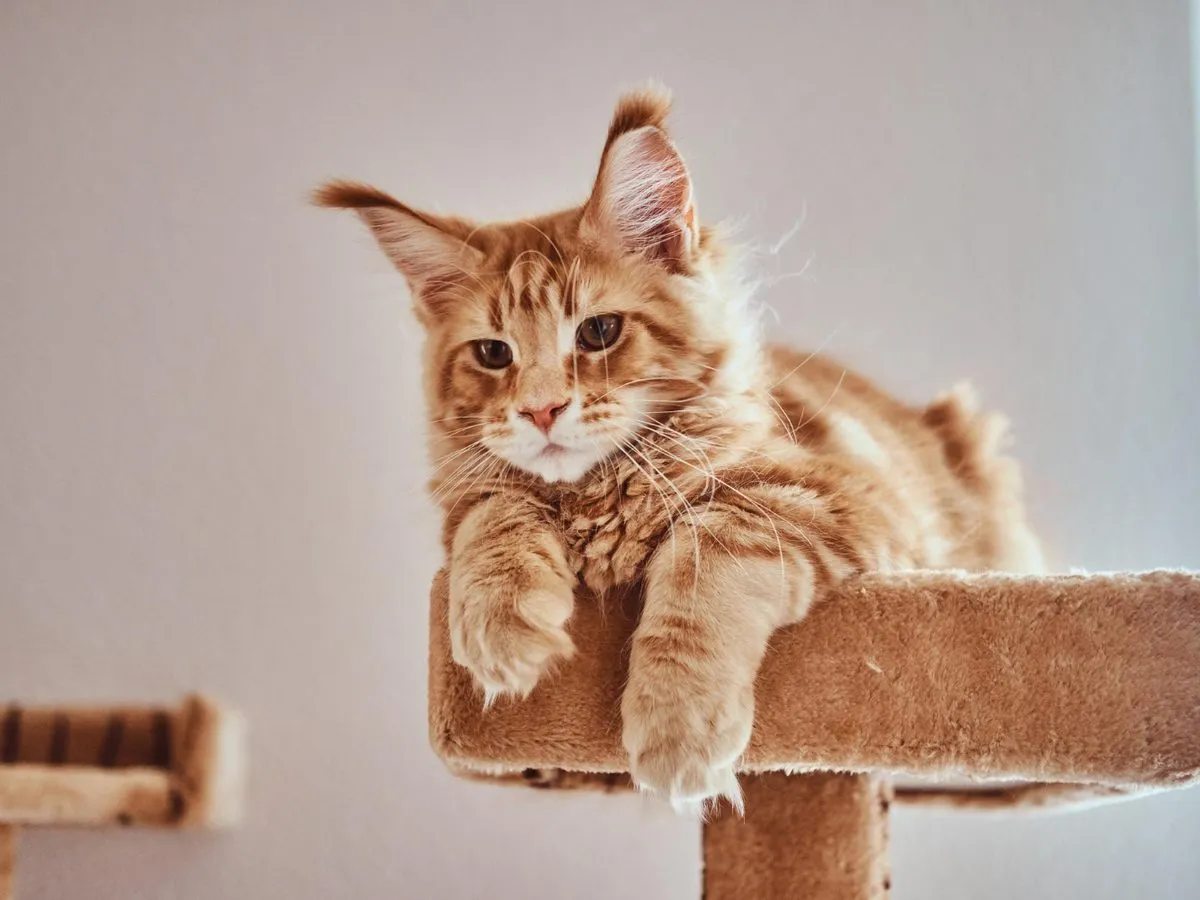
Climbing, scratching and lookout spots
According to TASSO, cats live in three dimensions, and a well-thought-out layout matters more than the size of your home.
Cat tree and climbing routes
Materials: sturdy cat tree, free shelf or cupboard tops, wall-mounted elements · Time: set up once · Difficulty: medium
Cat trees, raised resting spots, shelves, catwalks or wall-mounted elements create vertical space, according to TASSO. Often it’s enough to make the tops of cupboards or shelves accessible and connect them. Without such climbing options, cats can’t act on their need to jump and observe, which according to TASSO encourages frustration and behavioural problems. A good cat tree, TASSO says, is sturdy, has a suitable material for the claws and a lookout platform on which your cat can stretch out fully. Where you put it matters more than how it looks. Why a scratching post is so much more than a piece of furniture is explained in Scratching posts: why they are essential for your cat’s well-being.
In multi-cat households, there should be no dead ends, says TASSO, so no cat can be cornered. Check the elements regularly to make sure they’re secure.
A window seat instead of the great outdoors
Materials: windowsill, blanket or perch · Time: set up once · Difficulty: easy
For cats, watching what’s happening outside from the windowsill is like television for us, according to the Deutscher Tierschutzbund. In its press release, TASSO recommends letting your cat watch the world, for example from a safe window seat, and checking whether a secured balcony is an option. Watch how your cat reacts, though: some enjoy the view, while others become stressed, for example by neighbourhood cats, says TASSO. In that case, privacy film on individual windows can help.
Warm spots and cardboard boxes
Materials: cardboard box, blanket, a secured warm spot · Time: hardly any · Difficulty: easy
According to TASSO, cats feel comfortable at higher temperatures than we do. That makes a resting spot on a secured radiator or in the winter sun by the window particularly popular in winter. And cardboard boxes, says International Cat Care, were practically made for cats. A new box two or three times a week delights most cats, and with entrance and exit holes it becomes a play den.
Building playtime into your day
When it comes to play, cats are sprinters rather than marathon runners, according to International Cat Care. Even one minute of frenzied activity is a good result. So several short sessions work better than one long one. The Deutscher Tierschutzbund recommends making play a fixed ritual, ideally at a particular time of day. In one of its brochures, the federation also recommends a clearly structured daily routine with rest time, mealtime and playtime, because this gives your cat a sense of security.
A simple daily plan for winter
Here’s what a day with an indoor cat could look like, even if you work during the day. The times are rough guides, not rules.
- Morning: a short wand-toy session of a few minutes, your cat catches the “prey” at the end, then breakfast.
- Before you leave: put part of the daily ration in a snuffle board or an egg box and hide a few pieces of kibble.
- During the day: the window seat, cat tree and a warm retreat are ready, strings and the wand toy are tidied away.
- Evening: a second short hunting session, for example a 5-minute round as in the tip below, again with a catch and a meal afterwards.
- Later: quiet time, with cuddles only if your cat wants them.
Rest is part of it
More activity doesn’t mean a non-stop programme. TASSO points out that “constant entertainment” can cause stress too. Stick to clear playtimes and respect your cat’s need for rest. According to TASSO, rhythm and routine create predictability and a sense of security.
Multiple cats, seniors and kittens
In multi-cat households, the AAFP and ISFM recommend playing with each cat individually and offering toys in different places so there’s no competition. Older cats still enjoy playing, just more gently, according to International Cat Care. Even if your cat lies down to play, it still benefits physically and mentally. Kittens generally need more and more intense play, according to the AAFP and ISFM, but with toys of a suitable size.
How to tell if your cat is bored
The American Association of Feline Practitioners (AAFP) lists, in a position statement on environmental enrichment for indoor cats, conditions and problems that indoor cats without a suitable environment are at greater risk of, including overgrooming and other compulsive behaviours, aggression, obesity and lower urinary tract disease. According to the AAFP, many of these disorders are often secondary to stress from a lack of appropriate stimulation.
So pay attention if your cat grooms itself excessively, suddenly becomes aggressive, scratches the furniture far more than usual, gains weight or stops using the litter tray. According to TASSO, cats spend a large part of the day sleeping and resting anyway. To find out when lots of sleep is normal, read our article My cat sleeps a lot: should I be worried?.
Important: not every change in behaviour is down to boredom. The AAFP position statement stresses that behavioural problems call for a thorough veterinary examination first. Only once medical causes have been ruled out or treated is it time for an activity plan. If your cat changes noticeably, ask your vet first.
Staying safe during play
To keep fun from turning into an emergency, a few simple rules from the sources above help:
- Put away strings, ribbons, wand toys and balls of wool after play. Swallowed string, ribbon or wool can, according to International Cat Care, cause the intestines to bunch up (intussusception), especially in kittens, which is a veterinary emergency requiring surgery.
- Don’t play with your hands or feet. The AAFP and ISFM and International Cat Care advise this to prevent injuries.
- Keep small parts that could be swallowed, cables and toxic plants out of reach. TASSO points this out.
- Avoid tilted-open windows or secure them with a tilt-window guard, and secure balconies reliably, says TASSO.
- Fill food games with the normal daily ration so that activity doesn’t turn into weight gain.
By the way: according to TASSO, indoor-only cats should also be microchipped and registered. They escape more often and more quickly than many people expect.
Frequently asked questions about indoor cats in winter
How often and for how long should I play with my indoor cat?
Short and often beats one long session. When it comes to play, cats are sprinters, according to International Cat Care, and even one minute of frenzied activity is a good result. The Deutscher Tierschutzbund recommends making play a fixed ritual at a particular time of day. Two short hunting sessions, one in the morning and one in the evening, are a good start.
My cat is bored despite having toys. What can I do?
According to the Deutscher Tierschutzbund, toys that are always lying around quickly become boring. Rotate them regularly and play actively with your cat, for example with a wand toy that lets your cat catch the prey at the end. Food games, cardboard boxes, climbing spots and a window seat add extra variety.
How can I tell if my cat is bored?
Possible signs include overgrooming, aggression, weight gain or other changes in behaviour. However, these signs can also have medical causes. So have your cat checked by your vet first.
Can an indoor cat be happy?
Yes, if its needs are met. According to TASSO, keeping a cat indoors only can meet its needs, but it requires places to retreat to, opportunities to climb and scratch, activity, hunting games and a close bond with its people.


